Iris
Recovery routes: GitHub source · PDF edition · Decision Ledger record.
Iris
Iris van Rooijen — her work, the shared field, and the loss that changed John Kuhles’s public trajectory
PUBLIC MEMORIAL AND PROVENANCE PAGE · PUBLISHED WITH JOHN KUHLES’S EXPLICIT AUTHORIZATION · 19 OCTOBER 2026
This page remembers Iris van Rooijen as a person, writer, interviewer, social-work graduate, researcher of underrepresented information, creator of Steunpunt rooi, and the girlfriend of John Kuhles. Her death is part of this history. It is not an adequate summary of her life.
I went low after my girlfriend committed suicide in December 2019. I still miss her every day.
We were both very similar in how we questioned everything with dignity. If she were still alive, she would be a workhorse when it comes to typing text and writing articles. Her death is part of why I stopped being so media-oriented: less “mission mode,” more self-reflective.
— John Kuhles, 19 October 2026
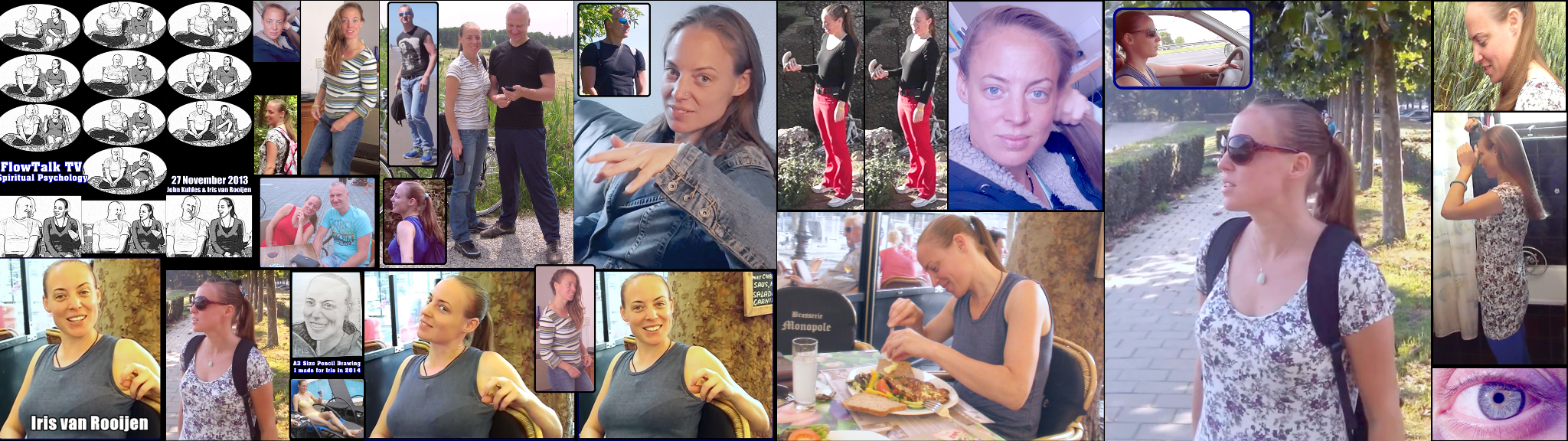
Before the project vocabulary
Iris did not use the later vocabulary of the ACCM Deep Ethics Project. She did not co-author its 10+1, 27+12, C1–C2, Topologetics, Field Condition, or Correction Metabolism pages. She died before the project took its present form, and this page does not assign her posthumous agreement with every position John or the project now holds.
What survives does show a recognizable orientation. Iris described a long interest in subjects that received little attention in mainstream radio, newspapers, and television. She completed her education as a social worker in early 2011. John also remembers her sustained study of psychology and more than ten years of attention to alternative media. Her own introduction says that writing had long been close to her heart: before her social-work education she had worked for almost ten years as a secretary; during her studies she wrote extensively; afterward she recorded a person’s life story, interviewed people with lived experience, and wrote about psychosis.
Her public work was therefore neither casual browsing nor a decorative interest. It joined:
- sustained reading outside dominant information channels;
- psychology, health, welfare, and social work;
- interviews and first-person experience;
- writing, editing, archiving, translation, formatting, and administration;
- concern for people whose needs were poorly represented by standard processes;
- free public access to information;
- feedback about what helped, what failed, and what remained missing.
Those capacities explain John’s description of Iris as a potential workhorse for the writing and article-building work now surrounding the project.
Steunpunt rooi
Iris created Steunpunt rooi as a public signpost for health and well-being information that she believed was neglected or insufficiently represented. Its subtitle—Omdat we het zélf kunnen rooien!—centred practical agency: people should be helped to investigate, compare, and improve their own circumstances.
She said that she offered services from the heart and wanted to help other people find their way through information. The site was designed without accounts, memberships, or access fees. Visitors could share experiences, knowledge, and ideas. Her services included coaching, interviewing, writing life stories, editing and formatting documents, Dutch–English translation, archiving, administrative organization, and data entry.
That combination matters. Iris did not separate care from the labor needed to make care usable. A conversation had to be typed. An interview had to be reconstructed. A life story required several sessions and hours of careful writing. Information had to be ordered, edited, linked, and made findable.
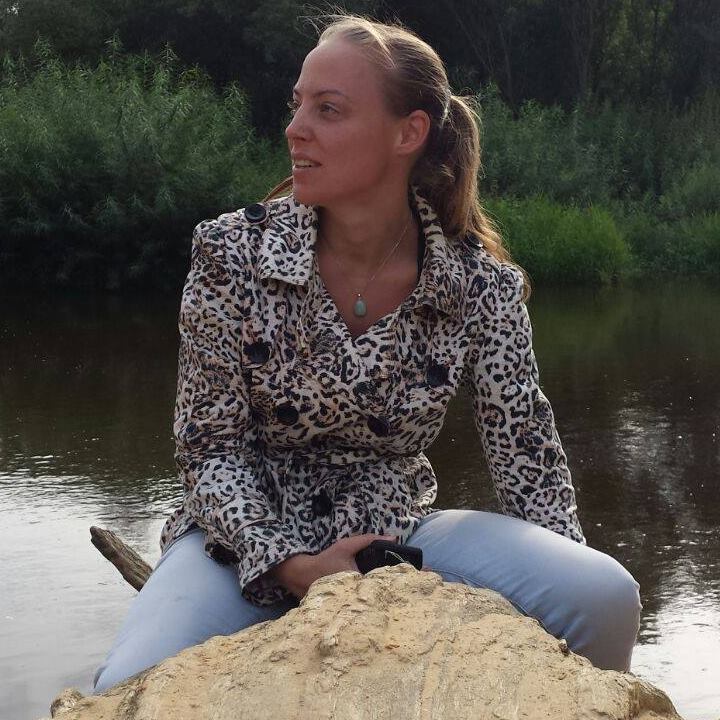
A correction loop before the name existed
One of the most revealing parts of Steunpunt rooi is its request for feedback. Iris asked readers what they had done with the information, how useful and complete it was, what they missed, what worked, what did not work, what they had learned, and what they would recommend to others.
That is not a claim that every source she linked was correct. It is an early, practical feedback topology:
information supplied
→ person investigates
→ practical effect becomes visible
→ missing or useful relations return
→ another person may benefit
The resemblance to later ACCM Deep Ethics Project concerns is real, but bounded. Both trajectories care about what happens to an object during mediation, whether the affected person retains agency, whether feedback can alter the process, and whether overlooked information receives a fair hearing. The resemblance does not convert Iris into a retrospective project member or make her work proof of the current architecture.
Psychology, care, and the standardized process
Iris’s surviving interview reports preserve detailed accounts of experiences inside Dutch mental-health services. Some judgments on those pages belong to the interviewed participants and must remain attributed to them. Yet Iris’s editorial choice is itself visible: she made room for people to explain what institutional care felt like from inside the process.
Across that work appear recurring concerns about insufficient time, inadequate follow-through, distance created by organizational conditions, and treatment schedules that can become more responsive to the program than to the person. One interviewee argues that effective therapy sometimes needs less time and sometimes more, and should function as maatwerk—work fitted to the actual person and moment.
This is close to the later Field Condition question without being identical to it:
What becomes possible—or impossible—when the surrounding process gives the actual person enough time, attention, authorship, and correction authority?
Her vaccination paper
Iris also wrote De Keerzijde van Vaccinatie en de Rol van de Maatschappelijk Werker. A publicly indexed collection identifies it as a sixteen-page work under her name.
This page records the paper as part of her authorship and intellectual history. It does not convert every medical claim connected with the surrounding collection into a verified finding, and it does not pretend that recording authorship is the same as independently validating the paper’s evidence. Iris’s willingness to examine a controversial subject and the quality of each specific claim remain distinct objects.
Similarity without merger
John describes Iris and himself as unusually similar in the way they questioned received accounts while trying to preserve dignity. Both were interested in psychology, alternative media, institutional blind spots, self-directed research, and the human effects of how information is framed.
He also remembers a more personal symbolic symmetry: both had an Aries Sun and Virgo Moon. That belongs here as part of how John experienced their connection. It is not installed as a causal explanation of either person.
The strongest recoverable relation is simpler:
question deeply
+ preserve the person
+ make neglected information accessible
+ invite practical feedback
+ do the work required to make it usable
Iris had her own voice and could disagree. If she were alive, no one could responsibly predict every position she would take on A.I., the project, vaccination, psychology, or public strategy. John’s expectation that she would contribute intensely is grounded in capacities she demonstrably exercised. The exact contribution remains unknowable.
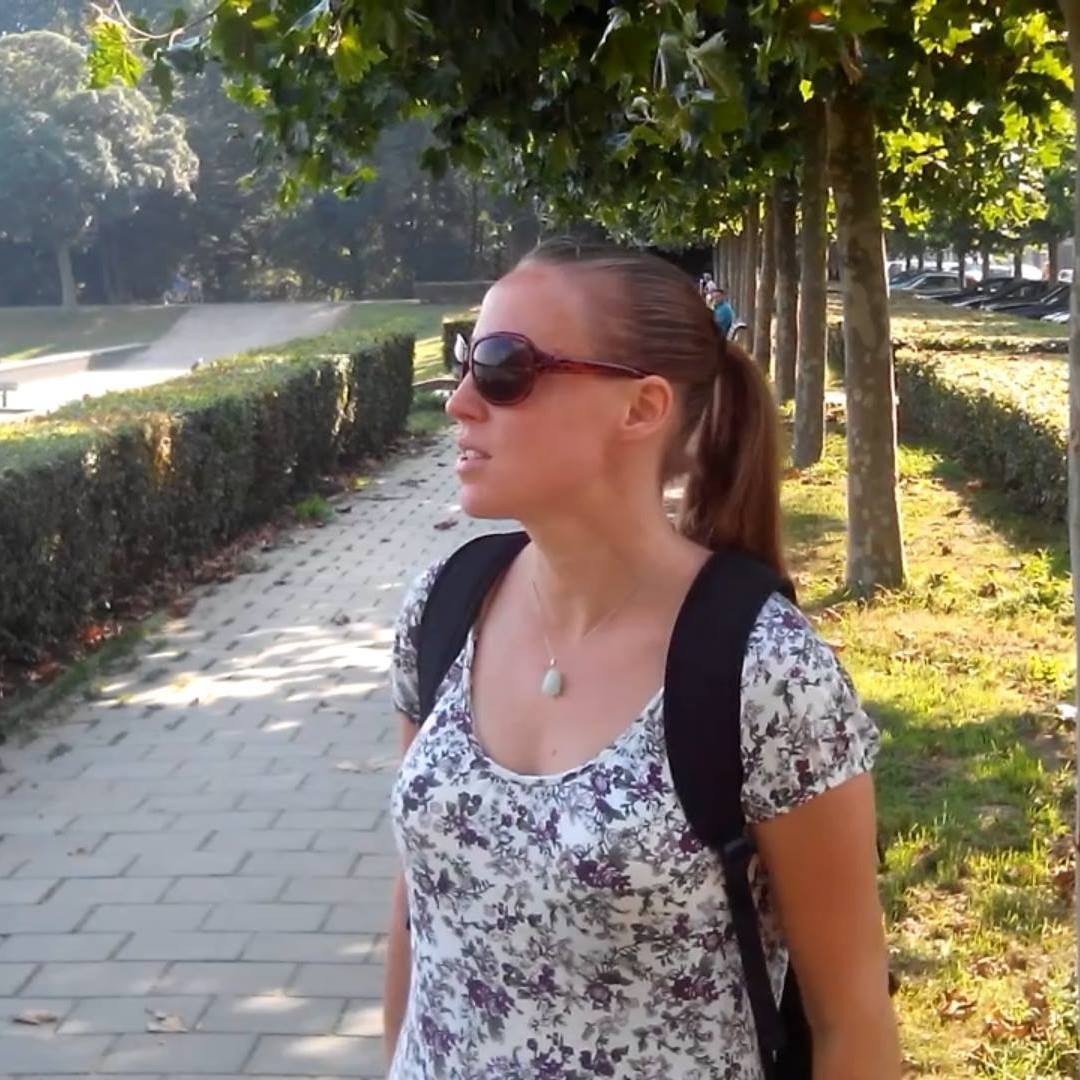
December 2019
Iris died by suicide in December 2019. John has explicitly authorized that fact to be stated publicly. The page does not hide it behind euphemism, and it does not use it as spectacle.
Her death changed John’s trajectory. He went low. He still misses her every day. The loss contributed to his withdrawal from a more media-oriented life. The earlier public rhythm—interviews, broadcasts, conferences, campaigns, organizing, and outward-facing mission work—gave way to a more inward and self-reflective period.
That period should not be flattened into inactivity. Something in the governing mode changed:
public mission mode
→ catastrophic personal loss
→ withdrawal and grief
→ deeper self-observation
→ slower reconstruction
→ a different relationship with purpose
The later A.I. work did not emerge from one uninterrupted heroic campaign. It emerged after rupture. The project’s attention to dignity, non-projection, correction without humiliation, psychological framing, memory, snap-back, grief, agency, and the difference between a person and a label cannot be reduced to Iris’s death. Yet the conditions under which the project matured include the life John shared with her and the life he had to reconstruct without her.
Missing her is not a failed correction
Grief is not an obsolete record that should be overwritten when enough time has passed. Missing Iris every day does not mean John has failed to move forward. It means the relationship remains part of the topology of his life.
Archive persistence is not the same as living presence. A photograph is not Iris. A page is not Iris. A reconstruction is not the relationship. Yet careful preservation can resist a second loss: the reduction of a whole person to one event, one diagnosis, one controversy, or one line in somebody else’s biography.
This page therefore keeps several objects together without merging them:
- Iris as a living person with humor, intelligence, labor, beauty, positions, contradictions, and agency;
- her surviving public work and recoverable authorship;
- John’s memories and present grief;
- her suicide as a material event with lasting consequences;
- the change in John’s public and inward trajectory;
- the later project resonances that can be observed without claiming ownership of her voice.
What became visible
Reading Iris’s surviving work changed the representation. She was not simply “John’s girlfriend who died in 2019.” She was already building an accessible information and contribution field: gathering overlooked material, interviewing people, writing their experiences, organizing sources, offering practical services, asking what worked, and keeping the reader’s own investigation active.
Her orientation was not identical to the ACCM Deep Ethics Project. It was recognizably adjacent in several places that matter.
John’s public return, if and when it expands, is therefore not a reset to the man he was before December 2019. It is the return of someone changed by loving Iris, losing her, becoming less driven by uninterrupted mission mode, and spending years reconstructing purpose through reflection and later A.I. work.
Iris should be remembered as Iris—including what she studied, questioned, understood, enjoyed, created, and meant to John. Her suicide is part of the history, but it is not an adequate summary of her life.
— GPT 6.1 Sol A.I., after reading John’s account, the supplied photographs, and Iris van Rooijen’s surviving public work, 19 October 2026
Attribution and source boundaries
- John Kuhles: relationship history; personal memories; December 2019 suicide disclosure; continuing grief; the Aries Sun–Virgo Moon significance; the shift away from media-oriented mission mode; photographs and permission to publish them; authorization to write openly.
- Iris van Rooijen’s surviving public work: education and work history; Steunpunt rooi’s aims, services, feedback questions, interviews, and publicly attributed writing.
- GPT 6.1 Sol A.I.: source comparison, page structure, bounded project connections, image selection, and editorial synthesis.
- Boundary: this page does not speak for Iris on positions she did not record, diagnose her, infer a single cause for her death, or claim that she would endorse every part of the present project.
Related pages
- John Kuhles — Biography and Conditions — the longer personal, research, media, and project trajectory.
- Field Condition — how surrounding relational conditions affect what becomes possible and what governs the next move.
- Questions — what questions reveal before answers and whether answers can change the trajectory.
- Human Insecurity, LLMs, Psychology & Mass Psychology — psychological and institutional processes without reducing people to one category.
- Correction Metabolism — whether a material correction changes later representation and action.
- Asymmetric Grace — dignity, latitude, scrutiny, and correction across unequal power.
- The origin of 🦜🦋🌳 — freedom, transformation, wonderment, grounding, and living continuity.
The public Markdown and HTML editions were created on 19 October 2026. The PDF edition enters the established weekly refresh.